Essential Components of a Screw Vacuum Pump and Their Functions
A screw vacuum pump is a critical piece of equipment in numerous industrial applications, valued for its oil-free operation, high efficiency, and reliability. Understanding the core components that make up a screw vacuum pump helps users optimize performance, reduce downtime, and extend service life. This article explores the essential parts of a screw vacuum pump and explains their roles within the system.
At the heart of every screw vacuum pump are the twin intermeshing rotors—typically made from high-grade stainless steel or coated alloys to resist corrosion and wear. These rotors rotate in opposite directions without contacting each other, creating expanding and contracting chambers that draw in, compress, and expel gas. According to a 2023 report by Pfeiffer Vacuum, rotor geometry directly influences pumping speed and ultimate pressure, with modern designs achieving compression ratios exceeding 10⁵:1.
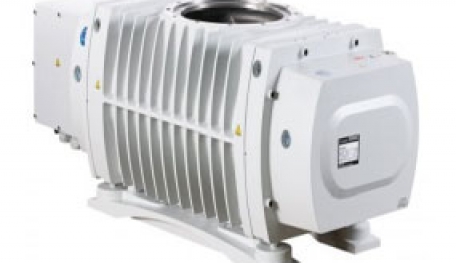
The housing or casing encloses the rotors and provides structural support. It is engineered to maintain precise internal clearances—often less than 0.1 mm—to ensure efficient compression while minimizing leakage. Many manufacturers now use thermally stable materials to reduce deformation under varying operating temperatures, as noted in a study published by the Journal of Vacuum Science & Technology A in 2022.
Sealing systems are another vital component. While screw vacuum pumps are often marketed as “dry” or oil-free, they still require dynamic seals at the shaft ends to prevent atmospheric ingress. Common solutions include labyrinth seals or dry-running mechanical seals. Data from Busch Vacuum Solutions indicates that advanced sealing technologies have reduced maintenance intervals by up to 40% compared to earlier models.
Cooling systems also play a significant role. During compression, gas temperature can rise dramatically—sometimes exceeding 200°C. To manage this, most industrial screw vacuum pumps integrate either air-cooled fins or water-cooled jackets. A 2021 technical white paper by Edwards Vacuum showed that effective thermal management improves energy efficiency by 12–15% and prevents premature wear of internal components.
Inlet filters and silencers are frequently overlooked but essential accessories. Inlet filters protect the pump from particulates that could damage rotors or increase clearance gaps over time. Silencers, on the other hand, reduce operational noise—modern units typically operate below 75 dB(A), meeting ISO 3744 acoustic standards. According to market research by Grand View Research, over 68% of new screw vacuum pump installations in Europe now include integrated noise-reduction features.
Control systems have evolved significantly with digitalization. Programmable logic controllers (PLCs) and variable frequency drives (VFDs) allow real-time monitoring of parameters like pressure, temperature, and power consumption. Industry data from the International Vacuum Association shows that smart control integration has led to a 20% average reduction in energy use across pharmaceutical and semiconductor facilities.
Bearings and drive mechanisms complete the assembly. High-precision angular contact bearings support the rotors and handle axial loads during operation. The drive system—usually an electric motor coupled via timing gears—ensures synchronized rotation. Reliability studies conducted by Leybold in 2024 found that bearing lifespan in well-maintained screw pumps exceeds 40,000 operating hours under standard conditions.
Each component of a screw vacuum pump contributes to its overall performance, durability, and adaptability across demanding environments. As material science and control technologies continue to advance, these systems are becoming increasingly efficient and user-friendly, reinforcing their position in modern industrial vacuum applications.