Significance of Vacuum Pump Flow Units and Selection Considerations
In various fields such as industrial automation, semiconductor manufacturing, scientific research experiments, and medical equipment, vacuum pumps serve as critical gas transfer devices, whose performance parameters directly impact the stability and efficiency of system operations. Among these parameters, the vacuum pump flow rate unit is a key metric for measuring the equipment's gas evacuation capability and represents one of the core parameters that engineering and technical personnel must thoroughly understand during the equipment selection process.
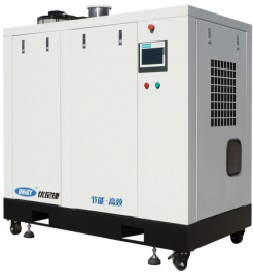
Vacuum pump flow rates are typically expressed in standard liters per minute (SLM) or cubic meters per hour (m³/h). The choice of specific units depends on the application scenario and industry conventions. For instance, in high-precision laboratory environments, SLM is often adopted to accurately describe the evacuation capacity for trace gases, whereas in large-scale industrial systems, m³/h is generally preferred to match the scale of the overall process flow. Regardless of the unit used, the essence is to describe the volume of gas passing through the pump body per unit time. However, it is important to note that this value is converted under standard conditions (typically 0°C and 1 atmosphere), rather than the actual volume under operating conditions.
Understanding the importance of vacuum pump flow rate units lies in their direct correlation to the system's ultimate vacuum level, evacuation speed, and operating efficiency. Errors in flow unit conversion or misunderstandings of the parameters may lead to oversized equipment selection, causing energy waste, or undersized selection, resulting in the inability to meet process requirements. Therefore, when evaluating vacuum pump performance, professionals must not only focus on the nominal flow rate on the nameplate but also conduct a comprehensive assessment by combining factors such as the operating pressure range, the nature of the gas being evacuated (e.g., whether it contains corrosive gases or particulates), and the system volume.
Furthermore, different types of vacuum pumps exhibit significant differences in flow characteristics. For example, rotary vane vacuum pumps offer high and stable flow output in the medium to low vacuum range, making them suitable for most general-purpose applications. In contrast, turbomolecular pumps excel under high and ultra-high vacuum conditions, although their effective flow is often limited by the capacity of the backing pump. While Roots pumps lack the ability to evacuate a vacuum independently, they can significantly enhance the flow performance of the main pump as booster pumps. Consequently, matching the flow rates between different pump types is particularly critical in the design of multi-stage vacuum systems.
In practical applications, the rated flow of a vacuum pump is also affected by environmental factors such as temperature, humidity, and backpressure. For example, in high-temperature environments, the reduction in gas density may cause the actual evacuation volume to deviate from the nominal value. Therefore, experienced engineers typically introduce a safety factor, reserving a margin of 10% to 20% based on theoretical calculations to ensure the system can operate stably under various conditions.
It is worth noting that with the development of energy-saving and intelligent trends, modern vacuum pumps not only emphasize high flow output but also place greater importance on energy efficiency and intelligent control. Some new dry screw vacuum pumps, through optimized rotor structures, significantly reduce energy consumption and maintenance frequency while maintaining high flow rates. These devices are gradually replacing traditional oil-sealed pumps in industries with high requirements for cleanliness and continuous operation, such as chemical processing and pharmaceutical manufacturing.
In summary, the vacuum pump flow rate unit is more than just a number on a technical data sheet; it serves as a bridge connecting theoretical design with engineering practice. Accurately understanding and properly utilizing this parameter contributes to enhancing the reliability and economic efficiency of the entire vacuum system.